
Kształtowanie pamięci i polityki historycznej na przykładzie przestrzeni miejskiej Budapesztu
DOI:
https://doi.org/10.12797/Politeja.18.2021.74.06Keywords:
memory policy, urban space, Budapest, HungaryAbstract
Shaping of the Memory and Historical Policy in Hungary. The Case of Urban Space of Budapest
Naming or changing street names (the same applies to monuments) means that certain political groups or communities can control the city. Activities in the urban space have great potential as they can lead to both community empowerment and fragmentation. Since 1989, the canon, or historical epochs to which the changing political elites at the helm of power tried to refer to by building a new urban space, also changed. The actions of Hungarian governments in the area of collective memory formation after 1989 can be described as incoherent. They leave their mark on the shape of the city, sometimes arousing consternation and sometimes the suspicion that certain decisions have a political overtone.
Downloads
References
Agárd I., Miszlivetz F., The Splendour of Golden Age and the Shadows of the Twentieth Century: Expanding and Waning Horizons in the Austro-Hungarian Monarchy, Central European Perspectives, VII 2016, [online] https://www.researchgate.net/publication/334545130_ The_Splendour_of_Golden_Age_and_the_Shadows_of_the_Twentieth_Century_Expanding_and_Waning_Horizons_in_the_Austro-Hungarian_Monarchy.
View in Google Scholar
Bódi L., Public Space and Resistance, VIII 2016, [online] http://mezosfera.org/public-spaceand-resistance/#fn-8113418-12.
View in Google Scholar
Boros G., Szoborpark. Interjú Eleőd Ákossal, „Élet és Irodalom” 2003, 19 XII.
View in Google Scholar
Boros G., Lugo L.L., Szoborpark, Budapest 2002.
View in Google Scholar
Dobos I., Szegedy-Maszák M., Kánon és kanonizáció: tanulmányok az V. Nemzetközi Hungarológiai Kongresszus, Debrecen 2003.
View in Google Scholar
Eckholm C., Hungary’s Identity Crisis Fought in Concrete and Bronze, [online] https://failedarchitecture.com/budapest-freedom-square/#:~:text=Hungary%E2%80%99s%20Identity%20Crisis%20Fought%20in%20Concrete%20and%20Bronze,far-right%20nationalism%20that%20is%20growing%20in%20strength%20today.
View in Google Scholar
Elvis Presley to be Named Honorary Citizen of Budapest, [online] https://www.theguardian.com/music/2011/mar/03/elvis-presley-honorary-citizen-budapest.
View in Google Scholar
Esterhazy-botrany: egy ujabb magyar-szlovak vita nyitanya, [online] http://www.atv.hu/kulfold/20110824_esterhazy_botrany_egy_ujabb_magyar_szlovak_vita_nyitanya.
View in Google Scholar
Felavatták Andrássy Gyula szobrát a Kossuth téren, [online] https://budapest.hu/Lapok/2016/felavattak-andrassy-gyula-szobrat-a-kossuth-teren.aspx.
View in Google Scholar
Flier G., Trianon 100: a magyar fájdalom és remény emlékművei az egykori Budapesten, [online] https://pestbuda.hu/cikk/20200101_flier_gergely_a_magyar_fajdalom_es_remeny_emlekmuvei_az_egykori_budapesten.
View in Google Scholar
Fritz R., Gespaltene Erinnerung. Museale Darstellungen des Holocaust in Ungarn. Divided Memory.
View in Google Scholar
The Museum Representation of the Holocaust in Hungary, [w:] Nationen und ihre Selbstbilder.
View in Google Scholar
Postdiktatorische Gesellschaften in Europa, red. R. Fritz, C. Sachse, E. Wolfrum, Wallstein 2008.
View in Google Scholar
Gadó J., The Splendour and the Misery of the House of Fates, [online] https://www.cultures-of-history.uni-jena.de/debates/hungary/the-splendour-and-the-misery-of-the-house-of-fates/.
View in Google Scholar
Gerő A., Retrotér – A Kossuth tér átrendezéséről, „Magyar Narancs” 2011, nr 43.
View in Google Scholar
Gyáni G., A magyar emlékezet helyei és a traumatikus múlt, „Studia Litteraria” 2012, nr 1-2, s. 41-50.
View in Google Scholar
Gyáni G., A Nation Divided by History and Memory: Hungary in the Twentieth Century and Beyond, London 2020.
View in Google Scholar
György P., Néma hagyomány. Kollektív felejtés és kései múltértelmezés: 1956-1989-ben, Budapest 2000.
View in Google Scholar
Hegyi D., Turning A Non-Place into a Place: An Interview by Dóra Hegyi with Members of the Living Memorial, [w:] War of Memories. A Guide to Hungarian Memory Politics, red. D. Hegyi, Z.S. László, Budapest 2015.
View in Google Scholar
Király B., Bozoki A., Lawful Revolution in Hungary, 1989-94, New York 1995.
View in Google Scholar
Köhr K., Die vielen Gesichter des Holocaust: Museale Repräsentationen, Göttingen 2012.
View in Google Scholar
Miklós G., Gőzerővel retusálják a múltat, „Népszabadság” 2014, 14 VI, s. 4-5.
View in Google Scholar
Monuments on the Move: The Past and Present of Budapest’s Kossuth Square, [online] https://craace.com/2019/11/28/monuments-on-the-move-the-past-and-present-of-budapestskossuth-square/.
View in Google Scholar
Palonen E., The City-Text in Post-Communist Budapest: Street Names, Memorials, and the Politics of Commemoration, „GeoJournal” 2008, vol. 73, no. 3, s. 219-230.
View in Google Scholar
Palonen E., Millennial Politics of Architecture: Myths and Nationhood in Budapest, „Nationalities Papers” 2013, vol. 41, no. 4, s. 536-551, https://doi.org/10.1080/00905992.2012.743509.
View in Google Scholar
Peto A., The Politics of Memory: Hungary’s Holocaust Simulacrum, [online] https://balkaninsight.com/2019/08/22/the-politics-of-memory-hungarys-holocaust-simulacrum/.
View in Google Scholar
Pótó J., Az emlékeztetés helyei, Emlékmûvek és politika, Budapest 2003.
View in Google Scholar
Rácz J., Hat koporsó a Hősök teren, Magyar Hirlap, 15 VI 2019, [online] https://www.magyarhirlap.hu/30-eve-szabadon/20190615-hat-koporso-a-hosok-teren.
View in Google Scholar
Réti Z., Past Traumas and Future Generations: Cultural Memory Transmission in Hungarian Sites of Memory, „The Hungarian Historical Review” 2017, nr 2, s. 377-403.
View in Google Scholar
Seewann G., Kovács E., Juden und der Holocaust in der ungarischen Erinnerungskultur seit 1945, „Südosteuropa” 2006, vol. 54, nr 1, s. 24-59.
View in Google Scholar
Székely J., Absences and Excesses in the Memory Politics of Budapest after 1989, [online] https://www.europenowjournal.org/2018/04/30/absences-and-excesses-in-the-memory-politicsof-budapest-after-1989/#_ftn3.
View in Google Scholar
The Trianon Memorial: A Monument to Hungarian Revisionism, [online] https://hungarianspectrum.org/2019/04/15/the-trianon-memorial-a-monument-to-hungarian-revisionism/.
View in Google Scholar
Toomey M., History, Nationalism and Democracy: Myth and Narrative in Viktor Orbán’s „Illiberal Hungary”, „New Perspectives” 2018, vol. 26, no. 1, s. 87-108, https://doi.org/10.1177/2336825X1802600110.
View in Google Scholar
Ungváry K., „Böse Deutsche und gute Ungarn”? Es war komplexer, „Die Presse” 2014, 3 II.
View in Google Scholar
War of Memories: a Guide to Hungarian Memory Politics, red. D. Hegyi, Z.S. László, Budapest 2015.
View in Google Scholar
Zeidler M., A magyar irredenta kultusz a két világháború között, Budapest 2002.
View in Google Scholar
Zeidler M., Irredentism in Everyday Life in Hungary during the Inter-war Period, „Regio. Minorities, Politics, Society” 2002, vol. 5, no. 1, s. 71-88.
View in Google Scholar
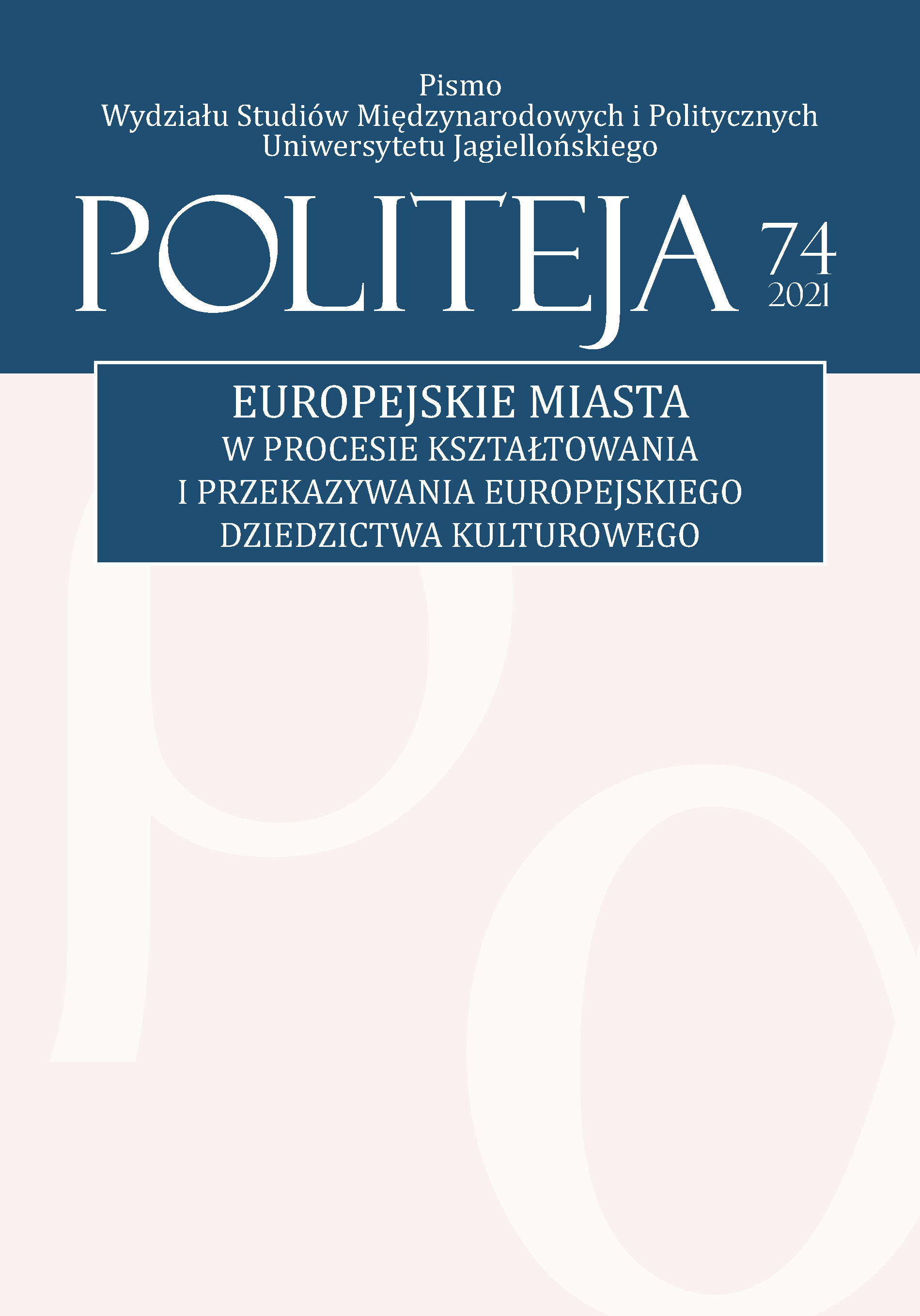
Downloads
Published
Versions
- 25-02-2022 (2)
- 15-12-2021 (1)
Issue
Section
License

This work is licensed under a Creative Commons Attribution-NonCommercial-NoDerivatives 4.0 International License.



